

A pair of strategic actions by Microsoft Corporation in the first quarter of 2026 made clear that the company had identified community consent for data center sites as a critical pathway for optimizing operating margins. In January, Microsoft announced Community-First AI Infrastructure, a five-point plan committing to responsible buildout of data centers across the United States, with ambition to expand abroad. Then, in March, Microsoft publicized its decision to end non-disclosure agreements with local governments where it operates or seeks to operate data centers. On its face, this was a sacrifice of confidentiality protections in the short term to try to improve community perception.
To local stakeholders and capital markets, Microsoft signaled that it was taking a “broad and long-term view of what it will take to run a successful AI infrastructure business,” as Vice Chair and President Brad Smith articulated in the January announcement.
At this moment a half-year later, it’s an opportune time to evaluate the corporate narrative that Microsoft has shaped:
The financial risk related to local opposition was something that Microsoft had already been communicating to investors. In December 2025, Microsoft’s Form 10-Q filing had told investors and regulators that “we are incurring significant costs to build and maintain infrastructure to support cloud-based and AI services, reducing operating margins” and that “we also face community opposition, local moratoriums, and hyper-local dissent that may impede or delay infrastructure development.”
A spring 2026 survey of 1,909 Americans by Zencity found that just 14% of respondents trust data center companies for accurate information about the impacts of proposed projects.
This month, in a low-trust atmosphere, Microsoft published its 2026 Environmental Sustainability Report, containing 28 pages (or almost half of the 66-page report) on the company’s infrastructure business. It is also a highly anticipated account of performance in FY 2025 and an expectation-setting outlook for the second half of 2026, due to the commitments, targets, and priorities it articulates.
In the analysis that follows, Microsoft’s Community-First AI Infrastructure is assessed for its capacity to preserve social license. Implications are discussed for investors and companies that design, build, own, and operate AI data centers. This post is fifth in a series of pieces I’m writing on data centers and social license to operate.
In case you need it: Overview of the Microsoft Community-First AI Infrastructure plan
In January 2026, Microsoft introduced its new initiative by placing AI “in a long line of new technologies to require large-scale infrastructure development” across America’s 250-year history as a nation. In this chronicle, AI follows the railroads, the electrical grid, the interstate highway system, and other forms of infrastructure. The company made five commitments to communities where it builds, owns, and operates data centers:
We’ll pay our way to ensure our datacenters don’t increase your electricity prices.
We’ll minimize our water use and replenish more of your water than we use.
We’ll create jobs for your residents.
We’ll add to the tax base for your local hospitals, schools, parks, and libraries.
We’ll strengthen your community by investing in local AI training and nonprofits.
To explain why the company made these assurances, it acknowledged that every era has seen conflicts over who bears the burdens of progress. The lesson that Microsoft drew from this history is “that successful infrastructure buildouts will only progress when communities feel that the gains outweigh the costs.” Clearly, the narrative framework contains a central concept of progress combined with the metaphor of a scale measuring benefits against costs.
The bulk of the inaugural announcement on the Community-First AI Infrastructure plan characterized its five commitments as an effort to treat the data center buildout as a resourcing challenge, with community relations shaping the technologies and policies that will be marshaled to solve the challenge. Read the announcement here
Six months later, the resourcing challenge was the organizing principle of the Infrastructure section in Microsoft’s 2026 Environmental Sustainability Report, disclosing on performance in the fiscal year ended June 20, 2025. This section described how the company manages the environmental impact of data centers across their lifecycle from design to construction and operation. These efforts are in the service of Microsoft’s “pursuit of becoming a carbon negative, water positive, and zero waste company that protects ecosystems” (p4), which has become brand language.
Another public communication that conveys how the Microsoft is implementing the Community-First AI Infrastructure plan is the “Microsoft in your community” website at local.microsoft.com, which I also reviewed in July 2026 for my assessment.
Some execution mistakes that risk degrading social license to operate instead of improving it
Although Microsoft is a respected company and has much to offer to community relations, its leadership in improving social license for itself and its sector is sometimes assumed rather than critically evaluated and earned.
Let’s consider some oversights in executing the Community-First AI Infrastructure plan – mainly from the perspectives of corporate communications and community relations – that might backfire, causing social license to worsen.
The emphasis on infrastructure buildout as primarily a resourcing challenge. Companies that funnel attention on resource availability and affordability are missing the bigger cultural picture. It’s correct that Americans are concerned about power, water, jobs, and revenues for local governments. But they are also focused on maintaining their way of life. Noise and compatibility with surrounding land uses are important to 79% and 81% of respondents, respectively, in the Zencity survey. Visual impact on community character is concerning to 69%. As I’ll explain in another post, corporate focus on the resource contest risks losing the cultural conflict. Traditionalism shows up in American society as defense of things perceived to be permanent: continuity of community, family, ways of working and living. This can manifest in rejection of technocratic modernity and individual mobility in favor of solidarity.
The narrative of inevitable progress. Placing the AI infrastructure buildout in a chronicle of American infrastructure from the 18th century onward, as if it simply follows and even replicates previous chapters, is a tactic that risks alienating broad swathes of the population. Microsoft’s history writing goes hand-in-hand with its visualization of data centers on Microsoft’s website as clean, sleek, expansive buildings -- often photographed from above, likely by camera-mounted drone. As I’ll write in another post, drawing on an argument by Kelly Gates, this visual strategy portrays hyperscalers as beneficent agents of progress and attaches a sense of inevitability to the unfolding future that AI infrastructure represents. In areas where people lead lives with traditionalist values, this is not always welcome.
The assumed role of educator, even parent. Emphasizing the company as teacher rather than listener may be perceived as condescension, which could catalyze people who are feeling unheard into more severe opposition. The image Microsoft should want to avoid is that of the deep-pocketed corporate giant, sending a fleet of technical experts to correct residents’ misunderstandings about the engineering required to manage energy, water, and other sophisticated processes. Yet for the “Microsoft in your community” website, the company produced a video, What’s inside a Microsoft datacenter, in which a child’s voice represents the viewer and asks questions. An adult mother’s voice represents the corporation and answers them. Paired with Microsoft’s Datacenter Academies, which otherwise could prove to be effective skilling programs for local workers and students, there is a prominent pedagogy in the Community-First AI Infrastructure initiative that could be received as patronizing.
How might Microsoft remediate the problems above? The Community-First AI Infrastructure plan needs to be less technocratic and more culturally attuned. It needs to respond to a fuller range of community concerns, some of which operate on emotional registers that are not captured through debate or education on substantive resourcing issues such as power or water.
Strategic implications for investors
Investors should have a framework for understanding management quality in community relations and related social license risk across the investment term. Companies that lag their peers have weaker operational resilience and worsened stranded asset risk from lower probability of maintaining social license through project cycles. Investors should be asking if risk management is integrated with operations, in other words, is the community relations function responding to risks specific to the company and substantiated by evidence, or is it window-dressing?
Strategic implications for data center builders and operators
AI infrastructure builders and operators need to integrate community relations into their enterprise risk management, which in turn needs to have competency in cultural sources of risk. Corporate communications and community relations functions should be assessed for their capacity to mitigate social license risk and monitored for tactical readiness and effectiveness. Firms that take a value-creation approach to community relations also have processes for identifying and managing opportunities. The most comprehensive approaches apply to full lifecycles of data centers from pre-bid to site development, handoff, operation, closure, and decommissioning.
Glyptique Consulting LLC is an advisory partner helping investors in the AI infrastructure value chain translate diffuse signals about regulatory, reputational, and ESG constraints into clear communication and stewardship strategies.
Request a complimentary conversation here.
July 15, 2026
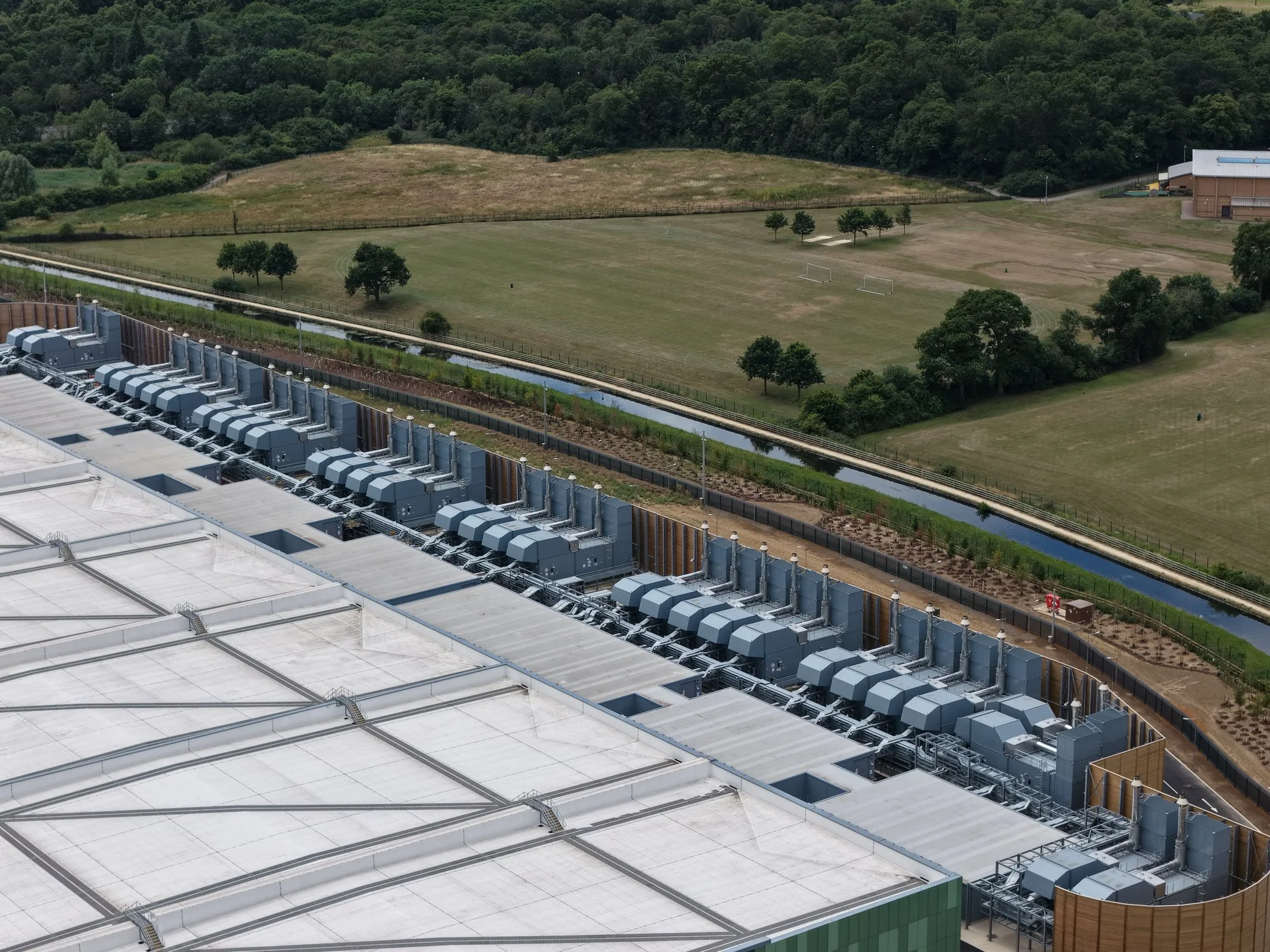
Photo credit: Tom Keeble
